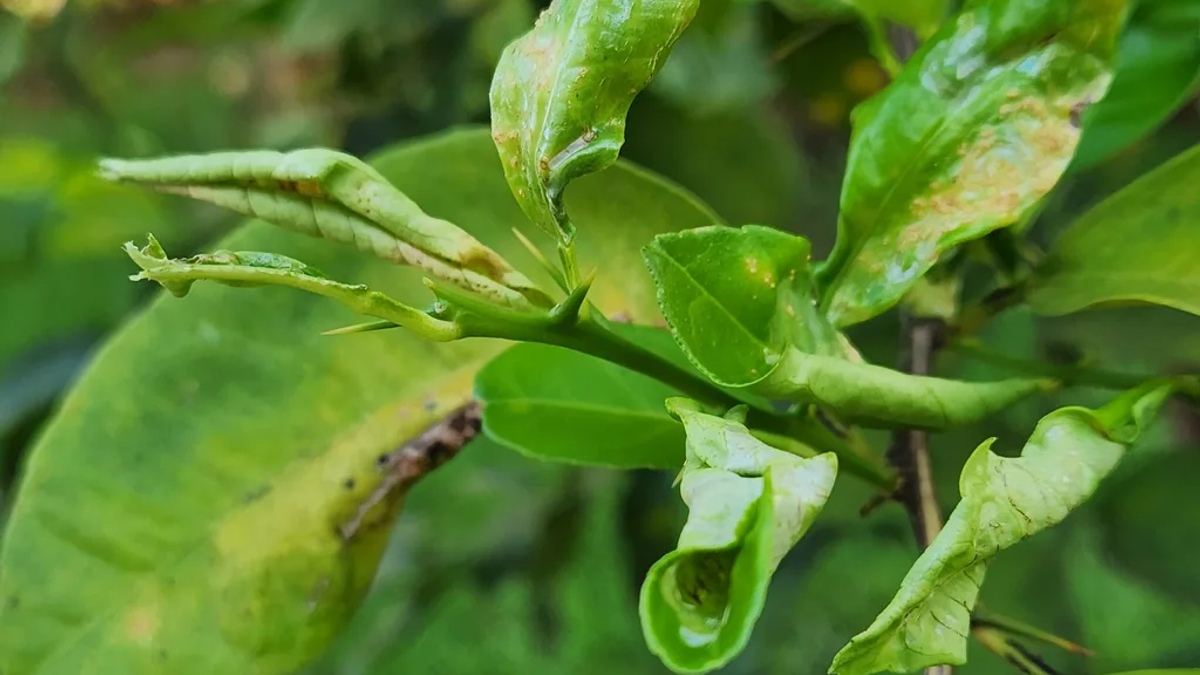
A recent study proposes the YOLO11n model combined with the LemonDisease-5i dataset to detect lemon leaf diseases with high accuracy and near real-time speed.
In Vietnam’s key lemon-growing regions—especially in the Mekong Delta—farmers constantly face disease outbreaks that significantly reduce productivity. Currently, disease identification relies heavily on visual inspection, a subjective and labor-intensive method that often leads to errors, particularly when symptoms are subtle or at early stages. This raises an important question: how can AI “see” and understand this local agricultural knowledge accurately? The YOLO11n model offers promising breakthroughs for precision agriculture in Vietnam.
LemonDisease-5i: When Data Becomes Local Knowledge
At the core of this innovation is the LemonDisease-5i dataset. Unlike generic datasets, the 1,782 images used in this study were collected directly from commercial lemon farms in Vietnam and annotated by agricultural experts at the lesion level, rather than labeling entire leaves.
This detailed annotation allows AI models to focus on specific disease characteristics, eliminating noise from healthy leaf areas. As a result, the model achieves high sensitivity, even for very small or early-stage lesions.
“Lemon production plays an important economic role in Vietnam; however, leaf diseases significantly reduce plant vitality, yield, and fruit quality, posing major challenges for precision agriculture.”
YOLO11n: Balancing Speed and Accuracy
Among the tested models, YOLO11n outperformed predecessors such as YOLOv8n and YOLOv10n. Compared to YOLOv9t—the fastest model with an inference time of 1.97 ms—YOLO11n demonstrated superior accuracy, achieving an mAP@0.5 of 93.2% with a processing time of just 2.58 ms per image.
Three key technical advantages make YOLO11n a well-rounded performer:
- Multi-scale feature extraction: Effectively detects lesions of varying sizes and complex shapes.
- Lightweight architecture: Optimized for deployment on resource-constrained devices.
- Real-time capability: Ensures low latency, suitable for continuous field monitoring.
Overcoming Misclassification: Handling Visually Similar Diseases
One of the biggest challenges for earlier models was confusion between visually similar diseases. Based on the confusion matrix, YOLO11n shows a dominant diagonal structure, indicating a very high correct prediction rate.
Notably, YOLO11n successfully distinguishes between greening disease (vang_la) and algal leaf spot (dom_rong)—two conditions that frequently confused models like YOLOv8n and YOLOv9t. It also achieves near-perfect accuracy in detecting leaf miner (sau_ve_bua). Reducing false positives helps farmers avoid incorrect pesticide use, saving costs and protecting the environment.
Conclusion: The Future of Smart Farming
The research on YOLO11n and the LemonDisease-5i dataset is more than an academic contribution—it demonstrates how AI is becoming deeply integrated into Vietnam’s agricultural practices. With its balance of accuracy and practicality, this model is poised to become a core component of intelligent agricultural monitoring systems.
In the near future, could every farmer carry an “AI expert” in their pocket to protect their crops? With advancements like these, that vision is closer than ever.